Click here to view this email in your browser. |
|
|
|
Welcome contact.firstname,
Welcome back to the second FRDC News: Aquaculture Edition, a quarterly e-newsletter that brings together stories highlighting the research, development and extension in aquaculture, to meet growing consumer demand for fresh, high-quality seafood.
This newsletter series highlights Aquaculture-led projects, partnerships and perspectives that have previously featured in FRDC News. By bringing them together in one place, we aim to recognise and amplify the significant investments FRDC, and our partners are making to improve the productivity and profitability of aquaculture. |
|
|
|
ESG reporting - a bridge not a barrier Small aquaculture businesses are turning ESG reporting into a benefit, paving the way for smarter, simpler sustainability tools that keep the industry competitive and confident. |
|
| |
|
|
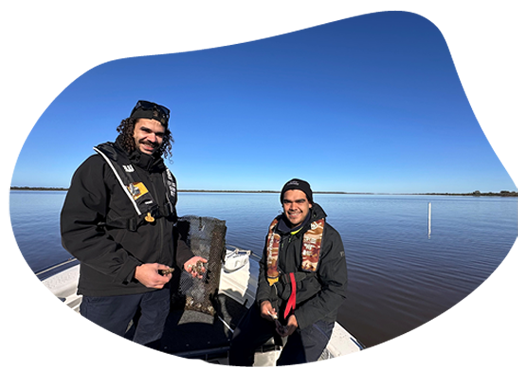
Shuck yeah! Oysters are thriving on Gunaikurnai Country in Victoria's Gippsland Lakes
An aquaculture trial, which is empowering First Nations peoples, combining their knowledge and stewardship with innovation, could soon mean Victorians are one step closer to enjoying home grown Sydney Rock Oysters (Saccostrea glomerata). |
|
| |
|
|
Staying one step ahead of the heat
A new marine heatwave outlook tool, providing up to four months advance warning of ocean temperature extremes, is now publicly available. |
|
| |
|
|
Safeguarding Australia's Barramundi: We've got a plan for that Australia’s Barramundi industry is evolving and improving biosecurity by replacing generic guidelines with practical, site-specific measures. |
|
| |
|
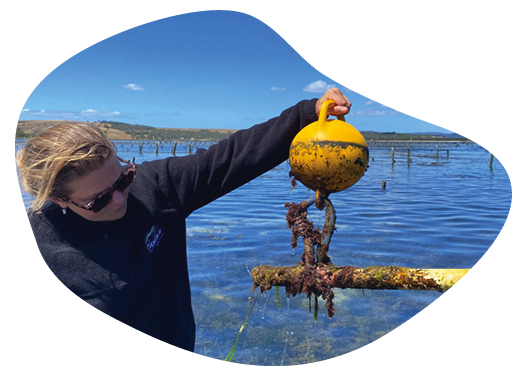
| Turning Tides in Pipe Clay Lagoon New findings on Tasmania's prized Pipe Clay Lagoon, once an oyster powerhouse, underscore the importance of consistent environmental monitoring. |
|
|
|
|
|
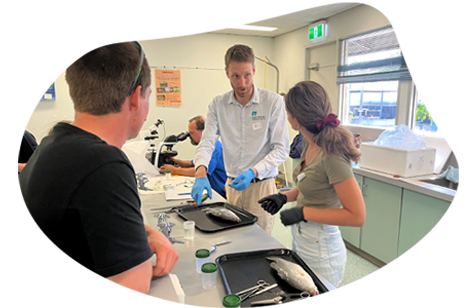
Shellfish food safety: Our lives depend on it New shellfish safety courses are enhancing knowledge and strengthening critical interpersonal skills, helping the long-term sustainability of Australia’s evolving aquaculture sector. |
|
| |
|
|
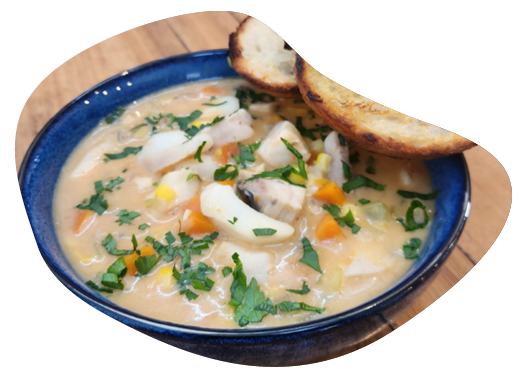
Welcome to Recipe of the season: A short segment where we will bring you a fresh recipe from a state or territory every edition. This edition is Tasmania.
As the country starts to get cooler, why not try a hot bowl of Seafood Chowder? Make sure to add a delicious fish of your choice! |
|
| |
|
Welcome to spotlight, where FRDC is shining a light on some of the extraordinary people we have worked with through day and night. |
Meet Dr James Fensham. James is an aquatic animal veterinarian for the Future Fisheries Veterinary Service (FFVS).
As an early-career veterinarian, James has been involved in more than 15 FRDC projects. Through these projects, he has enhanced the understanding of aquaculture disease outbreaks, improved access to chemical permits and bolstered farm biosecurity for a range of seafood species including Yellowtail Kingfish (Seriola lalandi), Black Tiger Prawns (Penaeus monodon), Southern Bluefin Tuna (Thunnus maccoyii), oysters and Barramundi (Lates calcarifer).
On day one as an aquatic veterinarian, he was involved with 2016-066, which explored the risk factors associated with the importation of raw prawns into Australia and the incursion of the catastrophic White Spot Syndrome Virus (WSSV) on Australian prawn farms, in late 2016. The projects results indicated a failure at the Australian border to accurately detect WSSV positive imported prawns and prevent their entry into the country. Ultimately, this research supported a Federal Government $20 million compensation package for impacted Australian prawn farmers.
James is passionate about aquatic veterinary science and hopes his career choice inspires other veterinarians to consider entering this field. “You have the opportunity to continually learn and put your skills to use in diverse and challenging environments. You find clues and you have to investigate. You get to have such a unique impact as an aquatic veterinarian,” he says. |
|
|
|
From standout social posts to community celebrations, our recent moments have been making waves. Check out some of the highlights that captured attention and showcased the energy, talent, and spirit of FRDC and its community in action. |
|
|
|
Australia’s Abalone is getting a boost for the future. 💪FRDC project 2019-110 is bringing science, industry and policy together to rebuild and future-proof iconic Abalone fisheries. |
|
| |
|
|
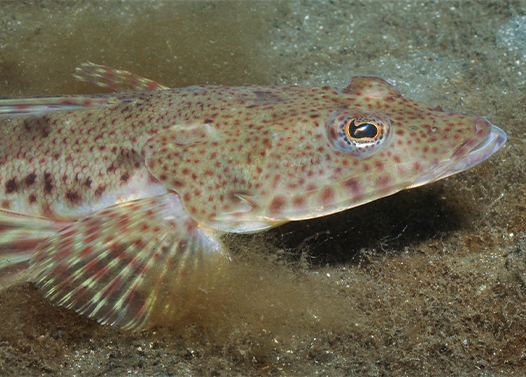
Southern Sand Flathead stocks are struggling. So FRDC funded scientists asked, what if we gave nature a hand?
Their model shows that releasing slightly older, stronger hatchery fish could rebuild numbers much faster, without losing wild diversity. |
|
| |
|
|
From PhD to practical change. Meet Dr Isobel Sewell, one of the researchers behind FRDC’s Black Soldier Fly (BSF) aquafeed project. |
|
| |
|
|
Final Report Summaries (1st October - 31st December) |
|
|
2022-158: Preparing for Threats and Opportunities of Alternative Proteins |
|
|
|
Principal Investigator: Paul Barnett This report examines the impact of alternative proteins—such as plant-based, fermentation-derived, and cell-cultured products—on Australia’s fishing and aquaculture sectors. Driven by rising global protein demand, sustainability concerns, and shifting consumer preferences, alternative proteins are rapidly gaining market share.
The study identifies both threats and opportunities: processed and lower-cost seafood products are most vulnerable to competition, while premium products like rock lobster and sashimi-grade tuna are protected by cultural significance and authenticity.
Key opportunities for the industry include developing hybrid products, investing in sustainable feed alternatives, and leveraging seafood waste for high value bioproducts. Economic modelling suggests that adopting alternative proteins can reduce costs and create new revenue streams, especially in aquaculture feed. However, regulatory and technological barriers remain, and maintaining social license through transparent sustainability practices is critical. The report recommends strategic partnerships, regulatory engagement, and targeted innovation to help the sector adapt and thrive. Ultimately, proactive investment in sustainability, product diversification, and consumer education will be essential for Australia’s seafood industry to remain competitive and resilient in a rapidly evolving protein landscape.
Read Final Report |
|
|
|
2022-049: Optimising the nutrition of farmed Murray Cod |
|
|
|
Principal Investigator: David Francis
This report presents a comprehensive evaluation of dietary strategies for Murray Cod aquaculture, focusing on protein-to-energy (P:E) ratios and fishmeal inclusion across two key grow-out stages.
Through controlled feeding experiments, researchers found that diets with higher P:E ratios (20–25 mg/kJ) and moderate fishmeal inclusion (≥15%) optimised feed conversion, protein efficiency, and growth, while supporting premium product quality. Complete replacement of fishmeal with plant proteins led to poorer growth and feed efficiency, highlighting the continued importance of marine-derived ingredients for larger fish. The study also shows that while long-chain omega-3 fatty acids (EPA, DHA) do not directly influence growth at tested levels, they are crucial for maintaining the nutritional value of fillets for high-value markets.
The findings underscore the need for stage-specific, species-tailored feeds that balance sustainability with performance, recommending partial fishmeal replacement, careful P:E ratio management, and retention of omega-3s in grow-out diets. The report provides actionable benchmarks for feed formulation, supporting the economic and environmental sustainability of the Murray Cod industry, and calls for further research into alternative protein sources, palatability, and seasonal diet adjustments to enhance production efficiency and product quality.
Read Final Report |
|
|
|
Interested in our Aquaculture research projects? |
|
|
|